// project
Rusty Revolution Website
Overview
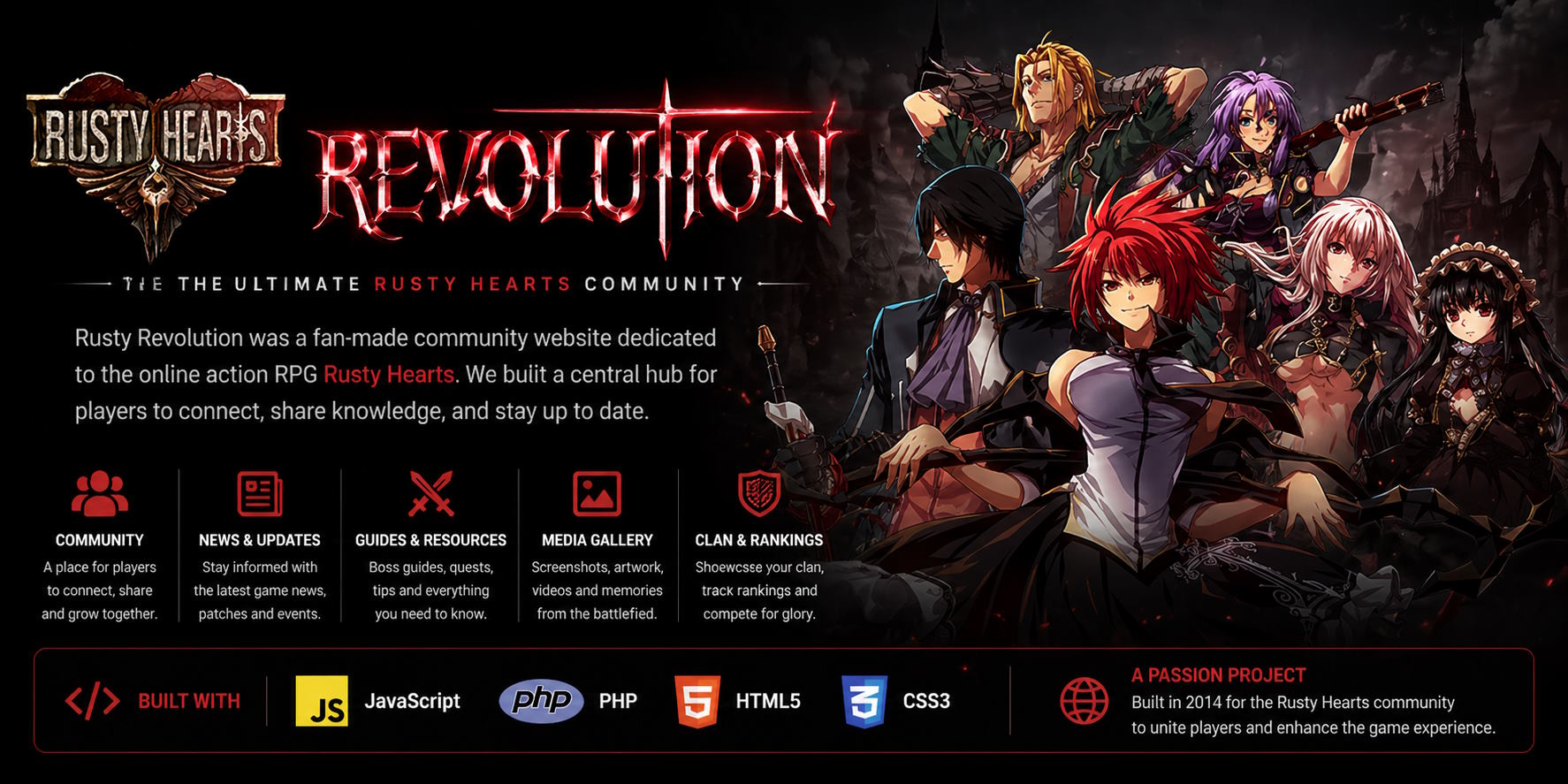
I designed and built the "Rusty Revolution" game community website for the Rusty Hearts private server project back in 2014. The site design remains active as of April 2026.
The site acted as a central hub for players, providing information about the project, gameplay, community links, updates, and server-related resources.
Built during a period when many game communities relied heavily on forums, Steam groups, and standalone websites, Rusty Revolution provided a branded online presence for an international player community.
Project Context
Rusty Hearts was an action hack-and-slash multiplayer online game with dungeon crawling, stylised combat, character progression, and PvE/PvP gameplay.
Rusty Revolution was built to support a community-led revival/private server effort, giving players a central place to learn about the project, join the community, and follow development or launch information.
Key Features
Community Landing Page
- Public-facing website for the Rusty Revolution project
- Introduced the game community and server concept
- Helped establish a recognisable project identity
Game Information Hub
- Provided information about the Rusty Hearts experience
- Presented key gameplay features such as dungeon crawling, classes, rewards, and PvP/PvE content
- Helped new or returning players understand the project
Player Onboarding
- Directed users toward community channels
- Supported sign-up or forum-based participation
- Helped players find downloads, updates, and community information
Forum / Community Integration
- Connected the website with wider community systems
- News stream pulled from forum thread posts
- Game accounts linked to forum user accounts with login
Technical Highlights
Early Web Development Project
This project demonstrates practical web development experience from 2014, including:
- Building and deploying a public-facing website
- Structuring content for a niche online community
- Designing a branded player-facing experience
- Supporting community growth through web infrastructure
PHP-Based Website
- Server-rendered pages
- Shared hosting / traditional web deployment
- PHP-era community site architecture
- Integrating static content with dynamic pages
Community Infrastructure
The site supported more than just static marketing content. It formed part of a broader community ecosystem involving:
- Game information pages
- Forums
- Chat/community links
- Server or project status information
- Player-facing documentation